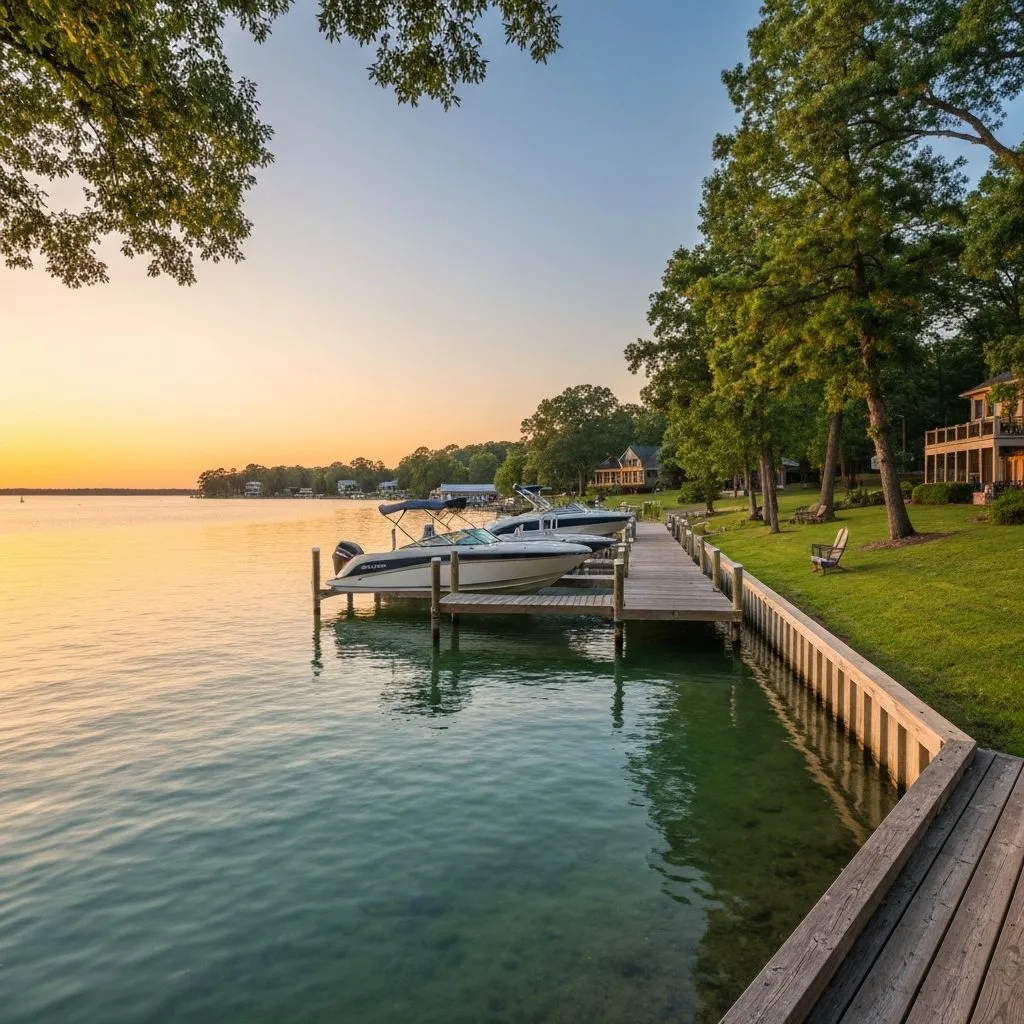
Buying waterfront property isn't like buying a regular home. There are docks to inspect, seawalls to evaluate, permits to verify, and water-specific issues that most buyers don't think to ask about until it's too late. After 10 years of selling lakefront property on Chautauqua Lake, I've learned exactly what matters — and what surprises buyers most often.
This guide covers the essential waterfront considerations you need to understand before making an offer on any lakefront or lake-access property.
17 mi
Lake length
75 ft
Max depth (basin)
$50K+
Typical dock value add
Lakefront vs. Lake Access: Know the Difference
The first and most fundamental distinction is whether a property is truly waterfront or simply has lake access.
Lakefront (or waterfront) means your property directly borders Chautauqua Lake. You own land to the water's edge. You can typically have a private dock, a swim area, and unobstructed lake views. These properties command premium prices — often 50-100% more than comparable off-water homes.
Lake access means you have the right to use the lake, but your property doesn't touch the water. This might be through a deeded dock slip, a community beach, or shared launch privileges. Lake-access properties offer significant savings but less convenience and no private shoreline.
Both can be excellent choices depending on your priorities and budget. But understand exactly what you're buying — "lake views" and "lake access" are not the same as "lakefront."
“Lake views” and “lake access” are not the same as lakefront.
Understanding Docks
Dock access is often the single biggest value driver in waterfront real estate. Here's what you need to know:
Private docks
Permanent or seasonal—solely for your use. Verify permits, condition, and ice damage risk.
Shared docks
A slip or space on a shared structure—less cost, more coordination and possible boat limits.
Deeded dock rights
Legal rights that transfer with the deed—valuable for many off-water homes; verify before you buy.
Private docks are exactly what they sound like — a dock solely for your use. They can be permanent (steel or wood pilings) or removable (seasonal aluminum docks). Permanent docks are more convenient but require permits and are subject to ice damage.
Shared docks give you a slip or space on a dock owned by an association or shared among neighbors. They're less expensive to maintain but require coordination and may come with restrictions on boat size or usage.
Deeded dock rights are a legal right to dock space that transfers with property ownership. These can be incredibly valuable for off-water homes and should be verified in the deed before purchase.
Always verify: What type of dock? What condition? What permits exist? Can you expand or modify it? These questions can swing a property's value by $100,000 or more.
Walk a shoreline with a local eye
Book a showing focused on dock and seawall reality—not just listing photos.
Seawalls and Shoreline Protection
A seawall is a retaining wall built along the shoreline to prevent erosion. On Chautauqua Lake, most waterfront properties have some form of shoreline protection — and its condition is critical.
Why it matters: A failing seawall means you're losing land, potentially threatening structures, and facing a major expense. Replacement costs typically run $300-$500 per linear foot. For a 100-foot lot, that's $30,000-$50,000. For a larger property, costs can exceed $100,000.
What to look for: Cracks, bulging, separation from the shore, and visible erosion behind the wall are all warning signs. A few hairline cracks may be cosmetic, but significant deterioration needs professional assessment.
I always recommend a seawall inspection for any waterfront purchase. This is a specialized inspection beyond the standard home inspection — look for contractors experienced with Chautauqua Lake conditions.
Water Depth and Bottom Conditions
Not all waterfront is created equal. Water depth at your dock matters enormously if you plan to boat, swim, or use watercraft.
Chautauqua Lake's depths vary dramatically. The upper (north) basin reaches about 75–78 feet at maximum, but many coves and bays are only 3-4 feet deep. Some properties advertised as "waterfront" have water so shallow you can't dock anything larger than a kayak.
For larger boats (over 20 feet): You'll want at least 4-5 feet of water at your dock, preferably more.
For swimming: A gradual bottom with 4+ feet near your dock is ideal. Steep drop-offs can be hazardous for children.
Bottom type: Sandy or gravelly bottoms are preferred for swimming. Mucky bottoms are common in some areas and can be unpleasant to walk in.
I always verify water depth and bottom conditions before showing waterfront properties. If this hasn't been documented, I'll arrange for measurements.
Permits and Regulations
New boathouse construction is essentially prohibited—existing boathouses are grandfathered and highly valuable on Chautauqua Lake.
Waterfront property on Chautauqua Lake is subject to regulations that don't apply to off-water homes. Understanding these before you buy prevents unpleasant surprises.
Dock permits: New York State DEC requires permits for dock construction and certain modifications. Existing permitted docks transfer with the property, but verify permits are current and in compliance.
Boathouse restrictions: New boathouse construction is essentially prohibited on Chautauqua Lake. Existing boathouses are grandfathered in and extremely valuable — if you want one, you must buy a property that already has it.
Setbacks and construction: Building near the water involves strict setback requirements. Adding a deck, expanding the home, or making other improvements may require special permits.
Flood zones: Many waterfront properties fall within FEMA flood zones, requiring flood insurance if you have a mortgage. Get insurance quotes before making an offer.
What to Inspect Before Buying
Beyond the standard home inspection, waterfront properties need additional evaluation:
- Seawall inspection: Specialized assessment of shoreline protection
- Dock inspection: Condition, permits, and any needed repairs
- Water depth verification: Documented measurements at the dock
- Flood insurance quote: Know your costs before committing
- Septic inspection: Especially important near water (many lakefront homes aren't on municipal sewer)
- Permit verification: Confirm all structures are properly permitted
I coordinate these inspections for my buyers and can recommend trusted local contractors who understand Chautauqua Lake's specific conditions.
Frequently Asked Questions
Lakefront means your property directly borders the water — you can walk from your back door to the shore. Lake access means you have rights to use a dock or beach, but the property itself is set back from the water. Both have advantages; lakefront offers convenience and views, while lake access often costs significantly less.
A private dock can add $50,000 to $150,000 to a property's value depending on the dock type, water depth, and location. Shared docks add less but still provide significant value. Properties without any dock access are typically priced 25-40% below comparable waterfront homes.
A seawall is a barrier built along the shoreline to prevent erosion and protect your property. Replacing a seawall can cost $300-$500 per linear foot — for a 100-foot lot, that's $30,000-$50,000. Always get a seawall inspection before buying waterfront property.
Yes. New York State requires permits for docks, and there are regulations about dock size, placement, and construction. Existing docks typically transfer with the property, but any modifications or new construction requires permits from the DEC and sometimes local authorities.
Boathouse construction is heavily regulated and rarely permitted on Chautauqua Lake. Existing boathouses are grandfathered in and add significant value to properties. If having a boathouse is important to you, you'll need to buy a property that already has one.
Many waterfront properties on Chautauqua Lake fall within FEMA flood zones, which means mandatory flood insurance if you have a mortgage. Premiums vary widely based on elevation and construction — anywhere from $500 to $5,000+ annually. I always recommend getting flood insurance quotes before making an offer.
Water depth varies significantly around the lake. The upper (north) basin reaches about 75–78 feet at maximum, while some shallow bays are only 3-4 feet deep. If you plan to keep a larger boat or want to swim off your dock, water depth at the property is critical. I always verify depth before showing waterfront homes.
Riparian rights give waterfront property owners certain privileges to use the water adjacent to their property — including building docks, drawing water, and accessing the lake. These rights typically transfer with the property but should always be verified in the deed.

Looking at Waterfront Property?
Waterfront purchases require expertise that goes beyond typical real estate. I've spent 10 years learning the specific considerations of Chautauqua Lake properties. Let me put that knowledge to work for you.